Marble statues possess an enduring allure. Across centuries, sculptors have turned to this noble material to give form to myth, faith, beauty, grief, and human struggle.
In this blog, I would like to introduce six famous marble masterpieces that continue to captivate viewers around the world. I hope these works will help you fall in love with sculpture and experience the timeless charm of art.
1. Michelangelo’s David (1501–1504)
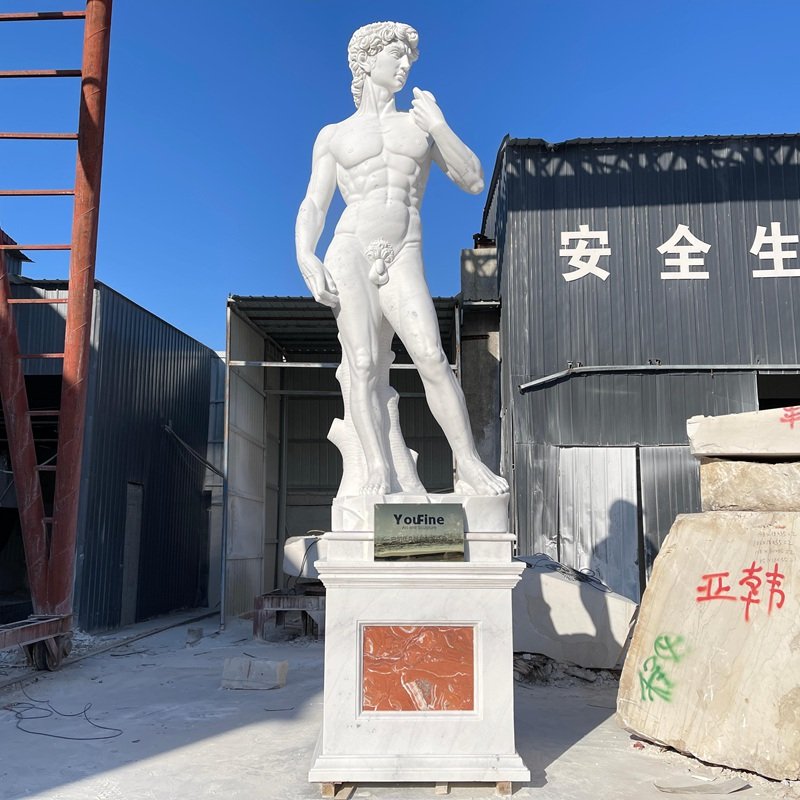
Carved from a single block of white Carrara marble, Michelangelo’s David is one of the greatest masterpieces of the Renaissance and a defining image of classical heroism. Standing over 17 feet tall, the statue embodies both physical perfection and inner strength.
David Without Goliath
Michelangelo completed David in 1504, when he was only 29 years old. The subject comes from the Bible, where David is typically shown in combat with Goliath or standing triumphantly over his defeated enemy. Earlier depictions, such as those by Donatello and Verrocchio, follow this tradition, portraying David with a sword and the severed head of Goliath.
Michelangelo made a radical artistic choice. Instead of showing the victory itself, he chose to depict the moment before the battle. David stands alone, alert and focused, his head slightly turned as if he has just spotted his opponent in the distance. This calm yet psychologically charged moment gives the sculpture extraordinary tension.
The result was a groundbreaking success and inspired later artists, including Bernini, who also created a David without depicting Goliath.
A Monumental Work of Art
In Michelangelo’s hands, David becomes an idealized youthful male figure shaped by the artistic traditions of Classical and Hellenistic antiquity. His curly hair, balanced contrapposto stance, and carefully modeled anatomy reflect a deep understanding of ancient sculpture.
David’s weight rests on his right leg while his left leg bends slightly, giving the body a graceful S-shaped contour. His head turns to the left; his brow is gently furrowed, his gaze sharp and resolute, and his lips closed in concentration. His right arm hangs naturally, while his left hand holds the sling draped over his shoulder. The muscles are clearly defined but not exaggerated. Everything in the figure suggests restrained energy—stillness infused with potential action.
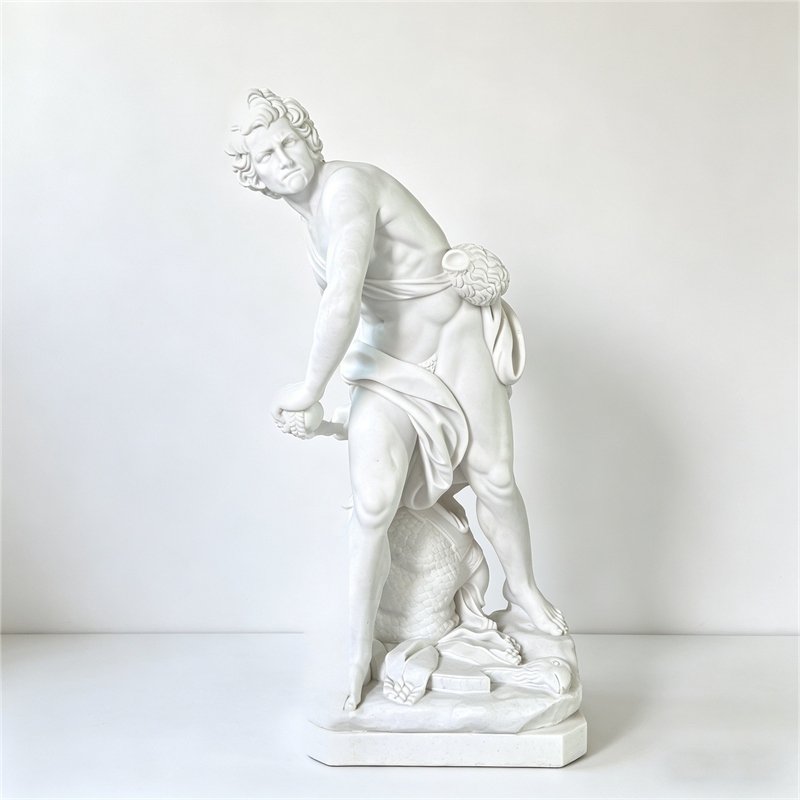
Historically, David was also seen as a political symbol of civic liberty. In Florence, it came to represent the courage of the republic in the face of external threats and internal domination, especially that of the Medici. Some even claimed that David’s vigilant gaze was deliberately directed toward Rome, as if watching over the freedom of Florence itself.
2.Venus de Milo(c. 100 BCE)
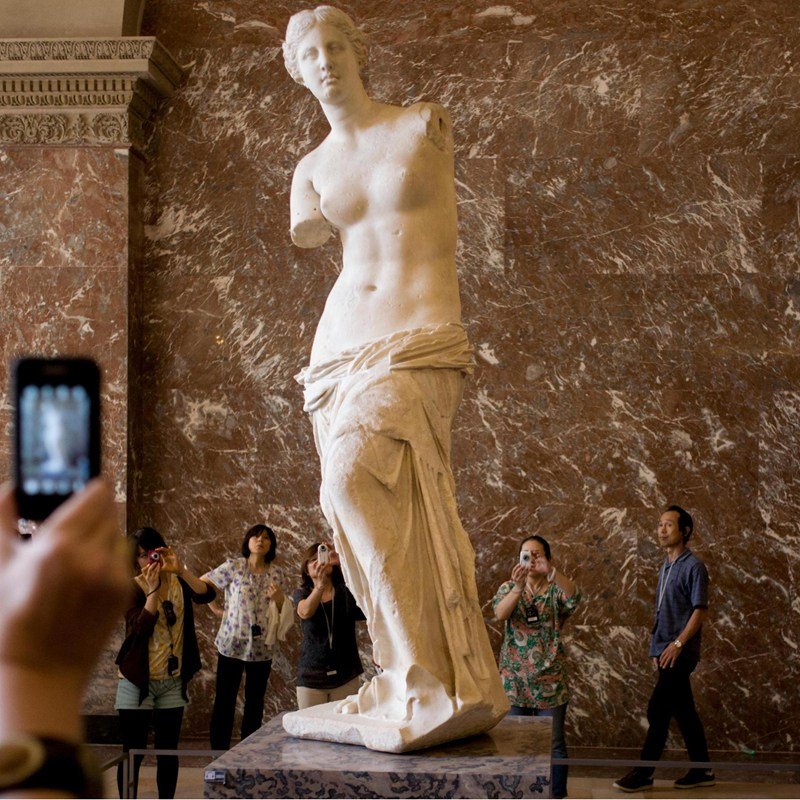
Discovered on the island of Milos in 1820, the Venus de Milo is one of the most celebrated sculptures of ancient Greece. Standing about two meters tall, this monumental female figure is generally identified as Aphrodite, the Greek goddess of love, beauty, and fertility. With her partially draped body and serene pose, she embodies an ideal of beauty that has transcended time.
The Shift from Aphrodite to Venus
Although the statue is widely known today as the Venus de Milo, this Romanized title became common only after its rediscovery in the modern era. In Greek terms, it is more accurately associated with Aphrodite of Melos. The change from “Aphrodite” to “Venus” reflects a broader pattern in Western art history, in which Greek works were often interpreted through Roman names and later European cultural traditions.
The name Aphrodite is often linked to the Greek word aphros, meaning “foam,” recalling the myth that the goddess was born from sea foam. “Melos” or “Milos” refers to the island where the sculpture was found, grounding the work in its original Aegean context.
An Icon of Beauty
With her hair gathered into a chignon and framed by softly wavy strands, Aphrodite stands in a graceful contrapposto pose. Her weight falls on one leg while the other bends slightly, creating a subtle rhythm of balance and movement. Carved from marble of exceptional quality, the statue combines the serenity of the Classical tradition with the sensual vitality of the Hellenistic age.
The sculpture is especially famous for its missing arms, and this incompleteness has become central to its fascination. Scholars have proposed many reconstructions, suggesting that she may once have held an apple, a shield, or even a spear. Yet none of these theories can be confirmed with certainty.
To me, the loss of the arms is not a flaw but part of the statue’s enduring power. Its incompleteness invites imagination and allows mystery to remain. Rather than diminishing its beauty, the missing parts deepen its poetic resonance. The figure may also originally have been painted in vivid colors and adorned with jewelry, in keeping with the ancient Greek practice of making sculpture appear more lifelike.
3. Michelangelo’s Pietà (1498–1499)
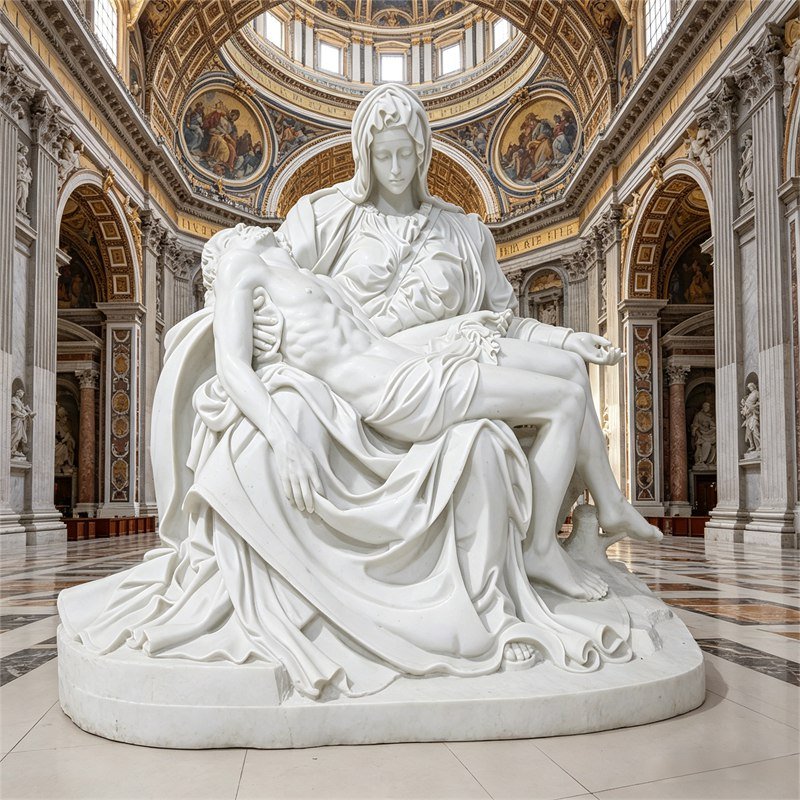
Michelangelo completed the Pietà when he was still in his early twenties, and it remains one of the most celebrated masterpieces of Renaissance sculpture. Carved from Carrara marble and now housed in St. Peter’s Basilica in Vatican City, it depicts the Virgin Mary holding the dead body of Christ after the Crucifixion.
The work reveals Michelangelo’s extraordinary technical mastery as well as his ability to unite physical beauty with profound spiritual sorrow.
A Strikingly Balanced Composition
At first glance, the composition may seem almost impossible: how can the body of a full-grown man rest on the lap of a seated woman without appearing awkward or unstable? This was a significant artistic challenge, and Michelangelo solved it with remarkable ingenuity.
One of his key strategies lies in the drapery of Mary’s robes. The rich folds enlarge her seated form and visually widen her lap, making Christ’s body seem more naturally supported. At the same time, the sweeping garments create a broad base that rises into a pyramidal composition, with Mary’s head at the apex. This triangular structure gives the sculpture both stability and elegance.
Michelangelo also idealizes Christ’s body. Though lifeless, it remains graceful, refined, and anatomically perfect. The diagonal placement of Christ across Mary’s lap introduces a gentle movement that prevents the sculpture from feeling rigid. As a result, the work achieves a delicate balance between stillness and motion, grief and beauty.
The Maternal Meaning of the Pietà
Many viewers wonder why Mary appears so young—perhaps even younger than her son. Michelangelo was not aiming at strict realism. Instead, he presents her as an ideal figure of purity, spiritual beauty, and eternal grace. Her youthfulness is symbolic: it expresses sacred perfection rather than biological age.
At the same time, Mary’s youth can also be understood on a deeply human level. In the eyes of a child, a mother can seem timeless, untouched by age. In this sense, Michelangelo’s Mary is not only a theological figure but also an image of universal motherhood.
The deepest emotion conveyed by the Pietà is maternal love. No matter how grown Christ has become, in death, he returns to the helplessness of a child in his mother’s arms. The sculpture thus becomes not only an image of mourning, but also a meditation on love, loss, and the bond between mother and child.
4. Laocoön and His Sons (1st Century CE)
One of the most powerful sculptures from the ancient world, Laocoön and His Sons, is now displayed in the Museo Pio-Clementino in the Vatican Museums. Measuring just over two meters in height, it has often been called the quintessential image of human agony.
What You Should Know About This Sculpture
The sculpture is believed to have been created by three Greek sculptors from the island of Rhodes: Agesander, Athenodoros, and Polydorus. It is said to have been carved from multiple blocks of marble, and some scholars believe it may have been based on an earlier bronze original. In any case, it stands as one of the defining masterpieces of Hellenistic art and has had an enormous influence on the history of sculpture.
The story of Laocoön comes from the Trojan cycle. The most famous version appears in Virgil’s Aeneid, where Laocoön and his sons are attacked and killed by sea serpents sent by the gods. In some variations of the myth, the details differ, but the essential theme remains the same: human suffering in the face of overwhelming and inescapable fate.
The Terrifying Image of Suffering
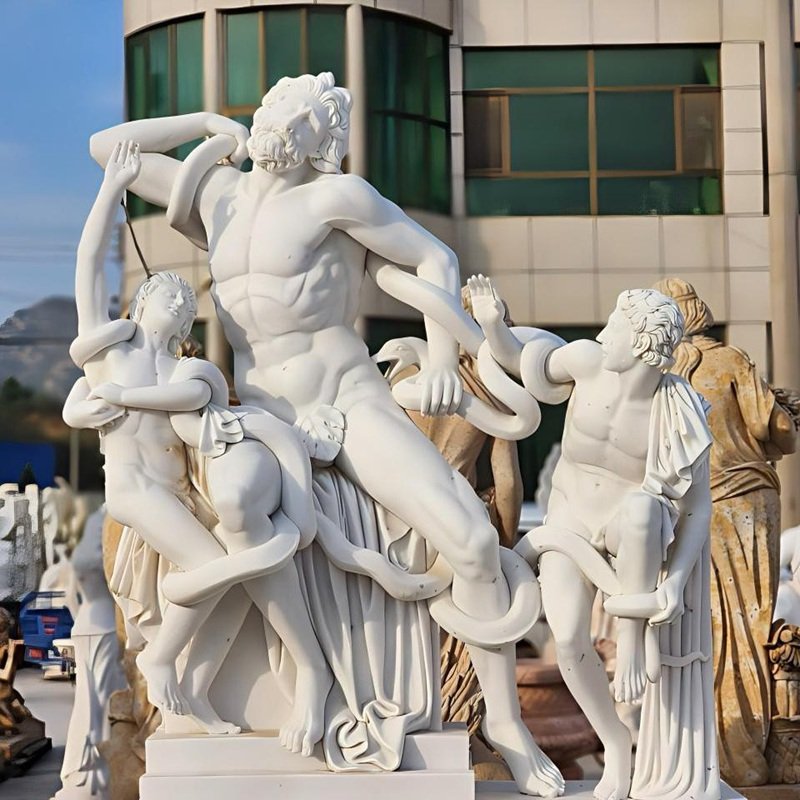
If we look closely at the sculpture, every muscle seems to cry out. The pain is not only physical but emotional: Laocoön witnesses the destruction of those he loves while enduring his own torment.
Laocoön stands at the center of the storm, his torso twisted and his muscles strained to the limit as he struggles against the serpents coiling around his body. His face conveys a terrible intensity, as though his silent scream has echoed across the centuries. His sons, caught beside him, intensify the tragedy—one appears near collapse, reaching toward his father in helpless appeal, while the other still resists but cannot escape the force pulling him toward death.
What moves us most deeply is not merely the perfection of the anatomy, but the act of resistance itself. Even when defeat is certain, they struggle. It is precisely this courage in the face of despair that gives the sculpture its eternal power.
5. Bernini’s Apollo and Daphne (1622–1625)
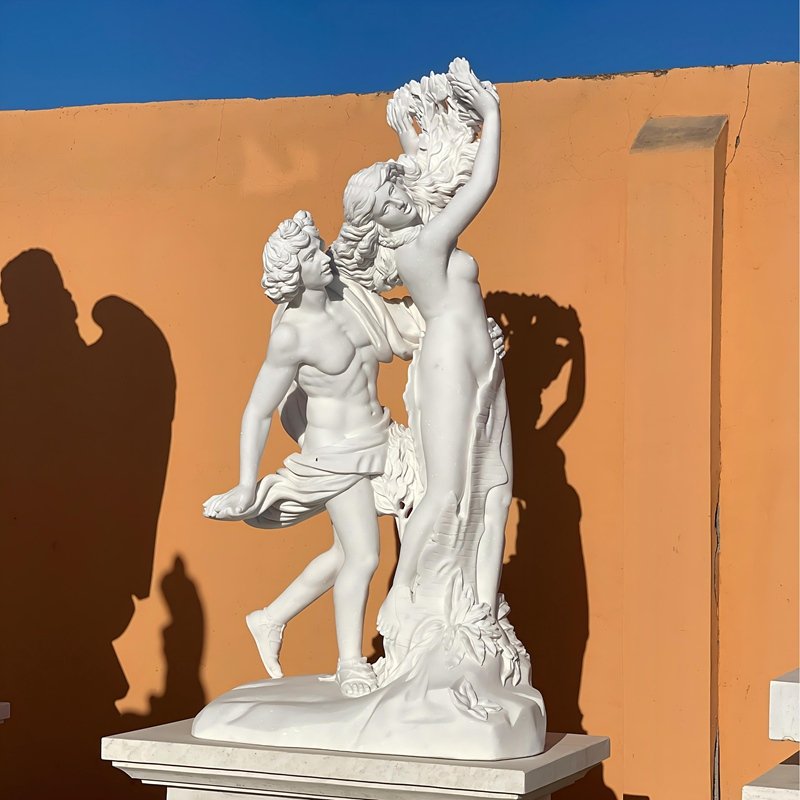
Inspired by a myth from ancient Greece and Rome, Bernini’s Apollo and Daphne is a masterpiece of Baroque sculpture. The life-sized work captures the climax of a tragic pursuit, revealing both the intensity of unrequited desire and the tension between human longing and divine intervention.
The Pain of Unrequited Love
Few experiences are more painful than unrequited love: to love someone who wishes only to escape from you. Bernini captures this emotional truth at its most dramatic moment.
Apollo has almost caught Daphne. His hand touches her body, and for an instant, it seems he has achieved his desire. But at that very moment, Daphne begins to transform. Her fingers sprout leaves, her arms turn into branches, and roots emerge from her feet. A tree trunk rises around her body as she is transformed into a laurel.
Apollo’s physical power proves useless against Daphne’s determination to preserve her chastity and freedom. He can do nothing but watch the woman he loves vanish before his eyes, becoming a tree little by little. His expression shifts toward shock and despair, while Daphne’s face suggests release—an escape purchased at an extreme cost.
The Tension Between Desire and Divine Will
This sculpture is not only about pursuit; it is also about resistance. Daphne’s transformation is the result of divine intervention, but it is also the fulfillment of her own refusal. She chooses not to submit, even at the cost of her human form.
In this sense, the deeper meaning of the work lies in the courage to resist. Daphne’s choice becomes a symbol of personal will and moral determination. Whether or not we agree with the means, the spirit behind her decision is powerful: she insists on defining her own fate. Bernini transforms this myth into a meditation on freedom, desire, and the price of autonomy.
6. The Elgin Marbles (c. 447–438 BCE)
Created under the supervision of Phidias and his workshop in fifth-century BCE Athens, the sculptures now known as the Elgin Marbles were originally part of the Parthenon on the Acropolis. These marble reliefs and figures are among the finest surviving achievements of ancient Greek art, celebrated for their harmony, refinement, and extraordinary sense of movement.
A Brief Description of Artistic Power
In the sculpted procession, the horsemen radiate energy and precision. The riders’ bodies are powerfully modeled, and their gestures create a vivid impression of motion. Cloaks sweep behind them, while the horses—with their straining necks and lifted forelegs—embody the force and elegance of controlled movement. Each animal appears distinct, yet all belong to a unified rhythm of forward progression.
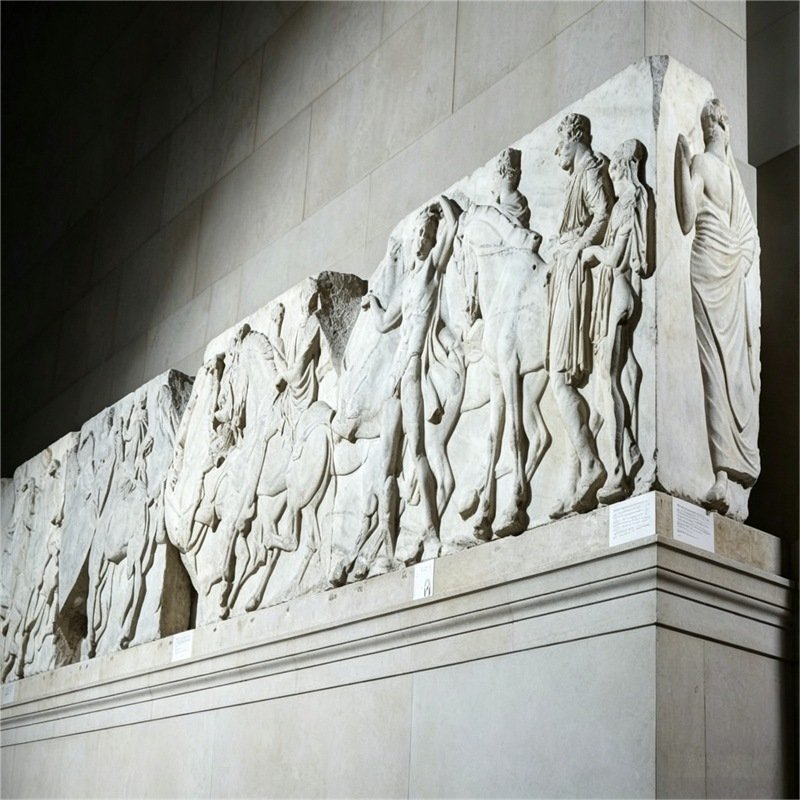
Elsewhere, standing figures provide a striking contrast to the speed of the cavalry. Their robes fall in folds that range from heavy and orderly to light and intricate, subtly expressing rank, ritual, and composure. Some female figures demonstrate the famous “wet drapery” technique, in which the marble garment clings to the body while still retaining a fluid, almost living softness. This interplay between structure and flow is one of the great triumphs of Greek sculpture.
The Elgin Marbles reveal how ancient artists could transform stone into something that appears full of breath, ceremony, and life.
Final Thoughts
Throughout history, sculptors have chosen marble—a natural yet demanding material—to express their deepest reflections on myth, religion, beauty, suffering, and life itself. These masterpieces continue to move us not only because of their technical brilliance, but because they still speak to the human condition.
That is why the classics never grow old. True art has no expiration date.
If these marble masterpieces have inspired you, take a closer look at the world of sculpture and discover how stone can tell stories of beauty, courage, sorrow, and love.
Which of these works moves you the most? Feel free to leave a comment or get in touch to share your thoughts on the timeless allure of marble art.